Partnership opportunities are available. Please contact the organizing committee via email workshop@psma.com or click here for more information.
|
Platinum Partners:
|
Gold Parnters |
Media Partners |
|
|
PSMA Magnetics Committee and PELS TC2 High Frequency Magnetics Workshop
Power Magnetics @ High Frequency
Saturday March 21 2026
Prior to APEC 2026
Henry B. Gonzales Convention Center
San Antonio, TX 78205
The PSMA Magnetics Committee and IEEE PELS will conduct the eleventh annual “Power Magnetics @ High Frequency” Workshop on Saturday, March 21, 2026, which is the day before and at the same venue as APEC 2026 in San Antonio, TX. The 2026 workshop builds on the ongoing dialogue of the workshop series over the previous ten workshops.
The purpose and focus of the workshop are to identify the latest improvements in magnetic materials, coil (winding) design, construction and fabrication, evaluation and characterization techniques and modelling and simulation tools. The Workshop will target the advancements deemed necessary for power magnetics to meet the technical expectations and requirements of new and evolving market applications. These are driven by higher operating frequencies and emerging topologies together with continuous advances in circuits topologies and semiconductor devices.
The target audiences for the 2026 Power Magnetics @ High Frequency Workshop include the designers of power magnetic components for use in electronic power converters, those who are responsible to implement the most technologically advanced power magnetic components necessary to achieve higher power densities, specific physical aspect ratios such as low profile, higher power efficiencies and improved thermal performance. The target audiences also include people involved in the supply chain for the power magnetics industry ranging from manufacturers of magnetic materials and structures, fabricators of magnetic components, providers of modelling and simulation software as well as manufacturers of test and characterization equipment.
The theme of the 2026 Power Magnetics @ High Frequency will be measurements and data processing trends to improve analytic models and simulation models towards developing better design tools, enabling magnetics optimization for existing and emerging applications. The workshop will address various aspects of measurement methods and creation of analytical models employing equations reinforced with empirical data.
The morning technical session will feature a keynote presentation and four lecture style presentations concluding with a panel Q&A session. There will be a five-minute Q&A after each lecture presentation. The schedule for this session is:
- Physics Based Model Approaches to Develop Analytical Calculations and Simulations; Peter Zacharius, University of Kassel
- Planar Transformers Electromagnetic Modelling Considering Capacitive Couplings up to 100 MHz; Lucas Pniak, SAFRAN Research and Technology Center
- Artificial Neural Networks (ANN) and Digital Twin to Optimize DAB Transformer Design; Daniel Rios Linares, Universidad Politécnica de Madrid
- Magnetic Materials Evaluation Kit with ScN Magnetics Framework and Beyond; Marek Rylko, SMA Magnetics
- Peter Zacharius, Lucas Pniak, Daniel Rios Linares, Alfonso Martinez, and Marek Rylko will lead a panel discussion regarding developing analytical and simulation models from measurement data. Everyone’s participation is encouraged.
The technical capabilities and disciplines that will be demonstrated and displayed during the technology demonstration/poster sessions are as follows:
Technology Demonstrations
- Trends and Opportunities in Nanocrystalline Soft Magnetic Materials for Power Electronics; Maira de Paula Nunes, CBMM
- Novel High-Current High-Frequency Integrated Magnetics for Scalable Vertical Power Delivery; Kamyar Ahmadi, Mo Khodadadi, Eneira
- New Core Geometries for Modern Magnetics; Mike Arasim, Fair-Rite Products Corp
- LCR Meters, Impedance Analyzers, Power Analyzers to Characterize Power Magnetics; Ihsan Dalgic, Hioki
- Static and Dynamic Characteristic Tests on Magnetic Devices; Ryu Nagahama, Iwatsu
- Apparent Permeability and Q; Tobias Trupp/JC Sun, Magnetec/Bs&T
- Current Driven Core Loss; Lukas Mueller, Jacob Lamphere; Micrometals, University of Nebraska
- Double Pulse Testing/Simulation Models; Kevin Hermans, PE Systems
- Planar Transformer Winding Placement Design Optimization; Andreas Muesing, Tom Wilson, SIMPLIS Technologies
- Next Generation of Ferrite Cores; Sebastian Bachman/Fritz Wohlrath/Lukas Reißenweber, Tridelta/STS/Coburg University
- Triple Pulse Testing of Magnetic Cores; Jun Wang, University of Bristol
- Automated Systems for Comprehensive Core Characterization and Loss; Joaquin Tristan, University of Pittsburgh
- Impact of Unequal Flux Distribution on Power Loss; Daniel Rios Linares/Marcin Kacki, Universidad Politécnica de Madrid /Hitachi Energy
- Test Methods to Confirm Voltage Rating of Metal Alloy Molded Inductors; David Ruiz Gomez, Wϋrth Elektronik
- CoreDataX; Alfonso Martinez, Wϋrth Elektronik
Posters
- Uncertainty Modeling for 1-20 MHz Core Loss Measurement; Nick Kirkby, Arizona State University
- Through-Silicon Via Micro-Inductors: Design, Fabrication, and Power Conversion Demonstration; Xuan Wang, UPenn
- Medium-Frequency Transformer Design for Solid-State Transformers: Design Guidelines, Testing Methods, and Challenges; Priya, Indian Institute of Technology Bombay
- Design of Low-Loss Magnetic-Core Toroidal Inductor for Multi-MHz Wireless Power Transfer Systems; Dheeraj Etta, Cornell University
- Compact Coupled Inductor with Pre-magnetized Leakage Inductance for High Current Boost Converters with Small Current Ripple; Pierre Küster, University of Kassel
The afternoon technical session will feature a keynote presentation and three lecture style presentations concluding with a panel Q&A session. A five-minute Q&A. will follow each presentation. The schedule for this session is:
- From the Steinmetz Equation to a Unified Magnetic Loss Model: Bridging Empirical Equations and Physical Insight; Asier Arruti Romero, Mondragon University
- High-Frequency Integrated Magnetics Using Nano-Crystalline Cores for Advanced DC-DC Converters; Reddy Andapally Bharadwaj, CBMM
- Developing Effective Magnetics Models for Power Electronics Simulation; Andrija Stupar, SIMPLIS Technologies
- AI for Magnetics: Machine Learning and LLM Applications in Power Component Design; Chema Molina, Frenetic
- Asier Arruti Romero, Reddy Andapally Bharadwaj, Andrija Stupar, and Chema Molina will lead a panel discussion regarding the application of design basics to achieve design automation. Everyone’s participation is encouraged.
There will be a networking hour after the afternoon technical presentation session has completed. This will be a final opportunity to interact with the technology demonstration presenters and the student poster presenters as well as an opportunity to relax and have informal dialogues with other workshop attendees.
Registration for the workshop is limited and is open at the following URL:
2026 Power Magnetics at High Frequency Workshop Registration
The preliminary agenda for the 2026 Power Magnetics @ High Frequency is available on the PSMA website at the following URL:
2026 Power Magnetics at High Frequency Workshop Preliminary Agenda
PSMA Magnetics Committee and PELS TC2 High Frequency Magnetics Workshop
Power Magnetics @ High Frequency
Saturday March 21 2026
Prior to APEC 2026
Henry B. Gonzales Convention Center
San Antonio, TX 78205
The PSMA Magnetics Committee and IEEE PELS is currently planning to conduct the eleventh Power Magnetics at High Frequency Workshop on Saturday, March 21, 2026, which is the day before and at the same venue as APEC 2026 in San Antonio, TX. The 2026 workshop will build on the ongoing dialogue established throughout the first ten workshops.
The purpose of this workshop is to explore recent improvements in magnetic materials, coil (winding) design, construction, and fabrication, as well as evaluation techniques, characterization methods, and modelling and simulation tools. The workshop targets the advancements deemed necessary by the participants for power magnetics to meet the technical expectations and requirements of new market applications where higher operating frequencies and emerging topologies are driven by continuous advances in circuits topologies and semi-conductor devices.
The target audiences for the 2026 Power Magnetics @ High Frequency workshop include the designers of power magnetic components for use in electronic power converters, those who are responsible to implement the most technologically advanced power magnetic components necessary to achieve higher power densities, specific physical aspect ratios such as low profile, higher power efficiencies and improved thermal performance. The target audience also includes people involved in the supply chain for the power magnetics industry ranging from manufacturers of magnetic materials and magnetic structures, fabricators of magnetic components, providers of modelling and simulation software as well as manufacturers of test and characterization equipment.
The theme of the 2026 Power Magnetics @ High Frequency will be measurements and data processing trends to improve analytic models and simulation models towards developing better design tools, enabling magnetics optimization for existing and emerging applications. The workshop will address various aspects of measurement methods and creation of analytical models employing equations re-enforced with empirical data.
The workshop will open with a keynote presentation by Peter Zacharius of the University of Kassel reviewing the fundamentals of analytical models for magnetic components. The morning session will consist of lecture presentations by Lukas Pniak of Safron Research and Technology Center covering modeling of capacitive coupling of planar transformers, Miroslav Vasic of the Universidad Politécnica de Madrid applying Artificial Neural Networks and Digital Twin to optimize the design Dual Active Bridge transformers, and Reddy Andapally Bharawaj of CBMM addressing data collection and analysis to create accurate models for FEA simulations. There will be one additional presentation regarding qualifying measurement data for use in models.
During lunch, breakfast, and the networking hour at the end of the workshop there will be an interactive session of tabletop technology demonstrations, each addressing specific technical disciplines and capabilities consistent with the workshop agenda. Workshop attendees typically spend ten to fifteen minutes at each technology demonstration station viewing informal interactive presentations. The technology demonstration format facilitates Interaction between the attendees and the presenters as a segue from the morning technical presentation sessions to the afternoon lecture presentation session. Technology demonstrations are confirmed by Mike Arasim of Fair Rite, Ihsan Dalgic of Hioki, Tobias Trupp of Magnetec collaborating with JC Sun of Bs&T, Lukas Mueller of Micrometals collaborating with Jacob Lamphere of the University of Nebraska, Kevin Hermanns of PE Systems, Chris Ball of Rohde & Schwarz, Sebastian Bachman of Tridelta collaborating with Fritz Wohlrath of STS and Lucas Riebenweber of Coburg University, Joaquim Tristan of University of Pittsburgh, Marcin Kacki of Hitachi Energy collaborating with Lufan Zhou of Universidad Politécnica de Madrid, Jun Wang of the University of Bristol, David Ruiz Gomez of Wϋrth Elektronik and Alfonso Martinez of Wϋrth Elektronik. We still have room for additional technology demonstrations. If anyone is interested to present a technology demonstration, we encourage them to contact the workshop organizing committee via e-mail to power@psma.com .
The afternoon session will begin with a keynote presentation by Asier Arruti Romero of Mondragon University on the development of unified magnetic loss model bridging empirical equations and physical insight. The keynote presentation will be followed by lecture presentations by Alfonso Martinez of Wϋrth Elektronik addressing modelling of stray capacitance and leakage inductance, Andrija Stupar of SIMPLIS Technologies speaking to the development of magnetic models for power electronics simulation and Chema Molina of Frenetic providing an update on the transition of magnetic design from design spreadsheets towards AI.
The workshop is still identifying students for student poster presentations. If you are a student and interested to present a poster, please contact the organizing committee through PSMA via e-mail to power@psma.com
Registration for the workshop is limited and is open at the following URL:
2026 Power Magnetics at High Frequency Workshop Registration
Any company interested in financially supporting the workshop as a partner can find more information regarding partner opportunities and benefits at the following URL:
2026 Magnetics Workshop Partnerships
Or contact the organizing committee through PSMA via e-mail to power@psma.com .
PSMA Magnetics Committee and PELS TC2 High Frequency Magnetics Workshop
Power Magnetics @ High Frequency
Saturday March 21 2026
Prior to APEC 2026
Henry B. Gonzales Convention Center
San Antonio, TX 78205
The PSMA Magnetics Committee and IEEE PELS is currently planning to conduct the eleventh Power Magnetics at High Frequency Workshop on Saturday, March 21, 2026, which is the day before and at the same venue as APEC 2026 in San Antonio, TX. The 2026 workshop will build on the ongoing dialogue established throughout the first ten workshops.
The purpose of this workshop is to explore recent improvements in magnetic materials, coil (winding) design, construction, and fabrication, as well as evaluation techniques, characterization methods, and modelling and simulation tools. This targets the advancements deemed necessary by the participants for power magnetics to meet the technical expectations and requirements of new market applications where higher operating frequencies and emerging topologies are driven by continuous advances in circuits topologies and semi-conductor devices.
The target audiences for the 2026 Power Magnetics @ High Frequency workshop include the designers of power magnetic components for use in electronic power converters responsible to implement the most technologically advanced power magnetic components that are necessary to achieve higher power densities, specific physical aspect ratios such as low profile, higher power efficiencies and improved thermal performance. The target audiences also include people involved in the supply chain for the power magnetics industry ranging from manufacturers of magnetic materials and magnetic structures, fabricators of magnetic components, providers of modelling and simulation software as well as manufacturers of test and characterization equipment.
The theme of the 2026 Power Magnetics @ High Frequency will be measurements and data processing trends to improve analytic models and simulation models towards developing better design tools, enabling magnetics optimization for existing and emerging applications. The workshop will address various aspects of measurement methods and creation of analytical models employing equations re-enforced with empirical data.
As with past workshops, the morning and afternoon sessions will open with keynote presentations that cover a broad range of related issues followed by lecture presentations on specific applications or technical issues. In addition to the brief Q&A period after each individual lecture presentation there will be a panel of the presenters at the end of the session who will address topics requiring more detail as deemed by the workshop attendees.
During lunch, breakfast, and the networking hour at the end of the workshop there will be an interactive session of tabletop technology demonstrations each addressing specific technical disciplines and capabilities consistent with the workshop agenda. Each technology demonstration station includes a brief ten-minute presentation. Interaction between the attendees and the presenters is highly encouraged during this portion of the agenda as a segue from the opening keynote presentation and the technical issues session.
If anyone would like to participate as a presenter for the technical demonstration session, please contact the organizing committee through PSMA via e-mail to power@psma.com with a description of your proposed technical topic. We are limited to ten technology demonstration sessions.
The specifics for the workshop structure and the presentations for the workshop are currently in progress and are not finalized. If anyone is interested in presenting on characterization of magnetic components and the development of analytical models or simulation models please contact the organizing committee through PSMA via e-mail to power@psma.com .
More details regarding the agenda for the workshop as well as registration for the workshop will become available on the PSMA website (www.psma.com/technical-forums/magnetics/workshop) over the coming months.
The 2025 Power Magnetics at High frequency Workshop was held on Saturday, March 15 in Atlanta, Georgia. The 2025 workshop marked the tenth annual workshop continuing the tradition of informative and synergistic dialogue between members of the magnetics design community that began in 2016 at Long Beach California.
The morning technical lecture session focused on physical implementations of magnetics designs for emerging applications and markets. The session consisted of presentations by Minjie Chen of Princeton, Ranajit Sai of Tyndall, Jens Kehl of Wurth Elektronik, Sebastian Bachman of Tridelta Weichferrite, and John McDonald of Atlas Magnetics.
The afternoon technical lecture session focused on trends in designing and modelling magnetics for emerging applications and markets. The session consisted of presentations by Charles Sullivan of Dartmouth, Mike Ranjram of Arizona State University, Lukas Mueller of Micrometals and Michael Freitag of Yageo.
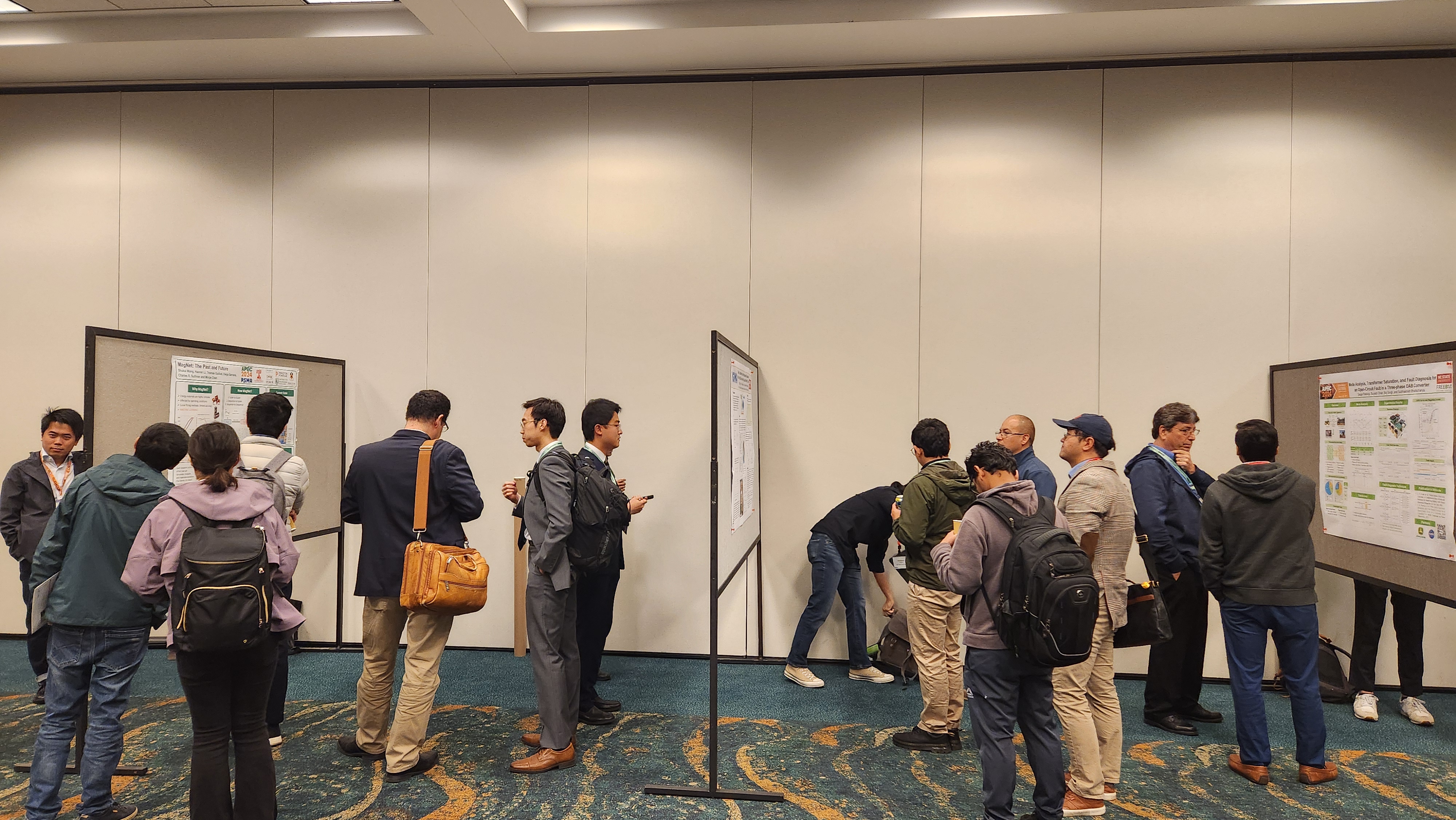
Student poster presentations by Jacob Anderson, Nick Kirkby of ASU, Todd Marzec of UPITT, Rachel Yang of MIT and Yibo Wang of City University of Hong Kong were available during the breakfast and lunch sessions.
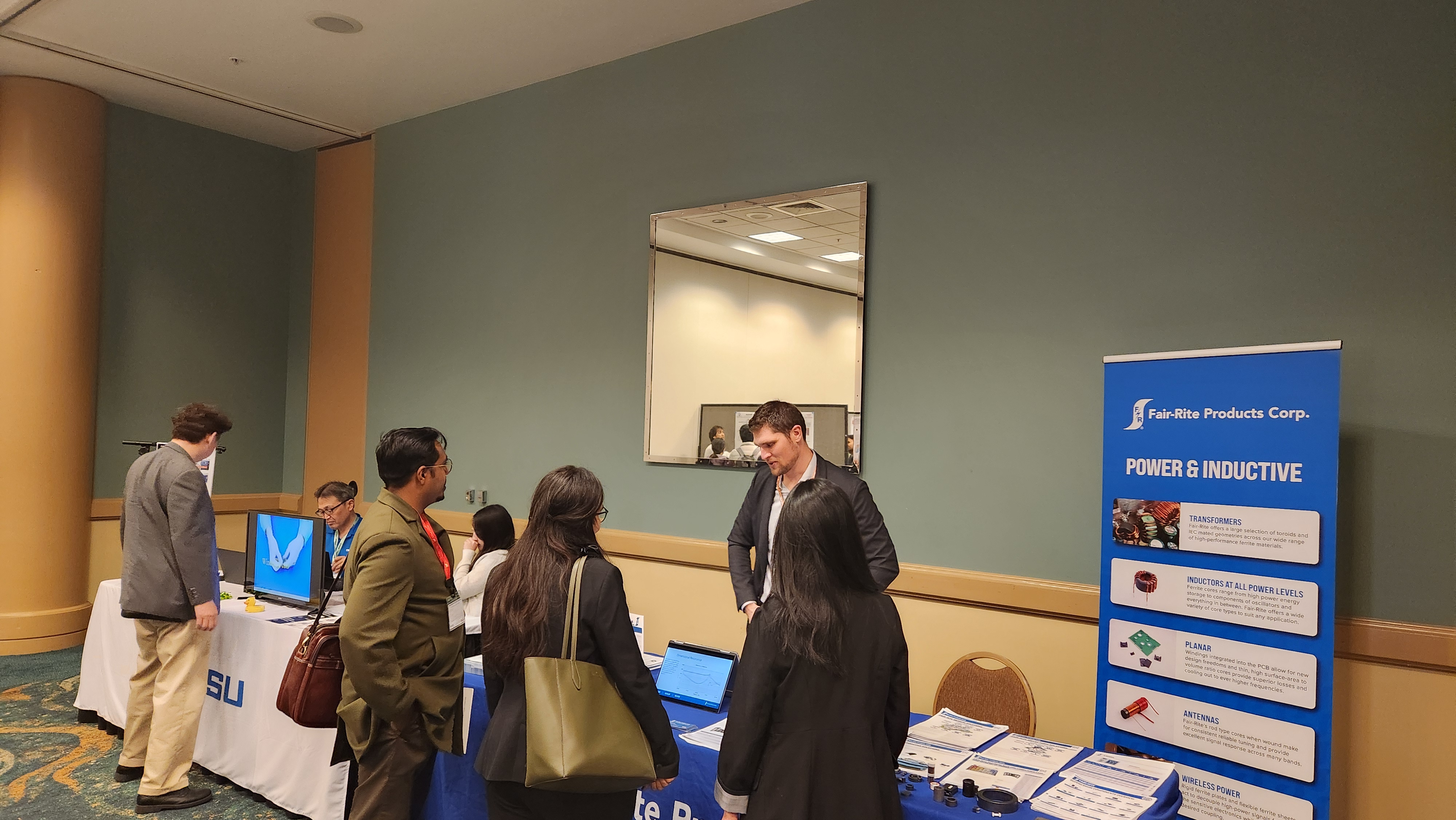
Technology demonstrations by Andres Arias, Risha Yu of Premier Magnetics, Alfonso Martinez and Mark Christini of Open Magnetics and Ansys respectively, Mike Arasim of Fair-Rite Products, Efrain Bernal of Wurth Elektronik, Reddy Andapally Bharadwaj of CBMM, Wilmar Martinez of KU Leuven, John McDonald of Atlas Magnetics, Lukas Mueller of Micrometals, Ryu Nagahama of Iwatsu, Akihiko Saito of Daido Steel, Jens Schweickhardt of PE Systems, JC Sun of Bs&T, Jun Wang of University of Bristol, Tom Wilson and Andrija Stupar of SIMPLIS Technologies and Kosuke Yuasa of Daido Steel were available during the breakfast and lunch sessions.
The high energy of the 2025 magnetics workshop has paved the way for the start of a second decade of workshops, beginning in 2026.
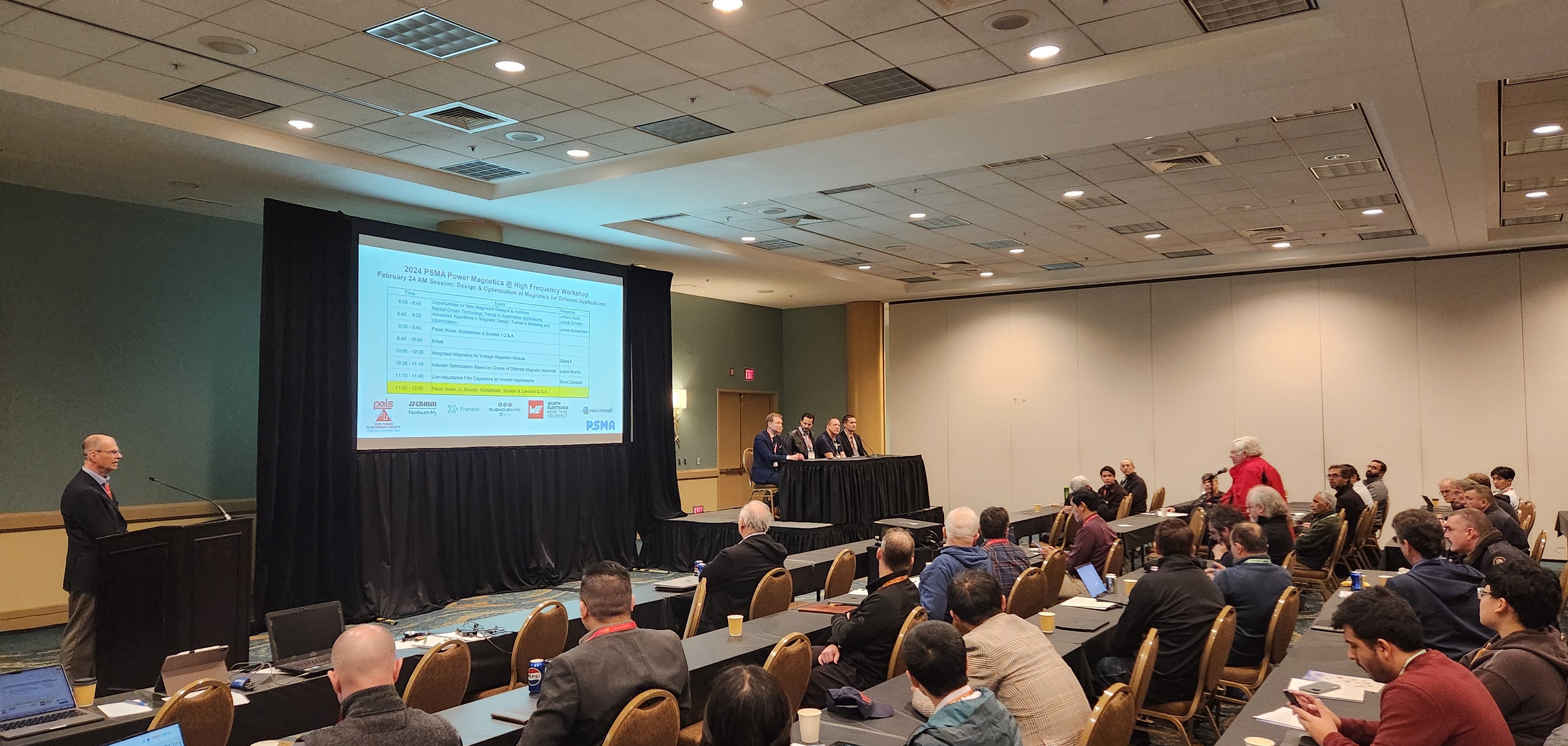
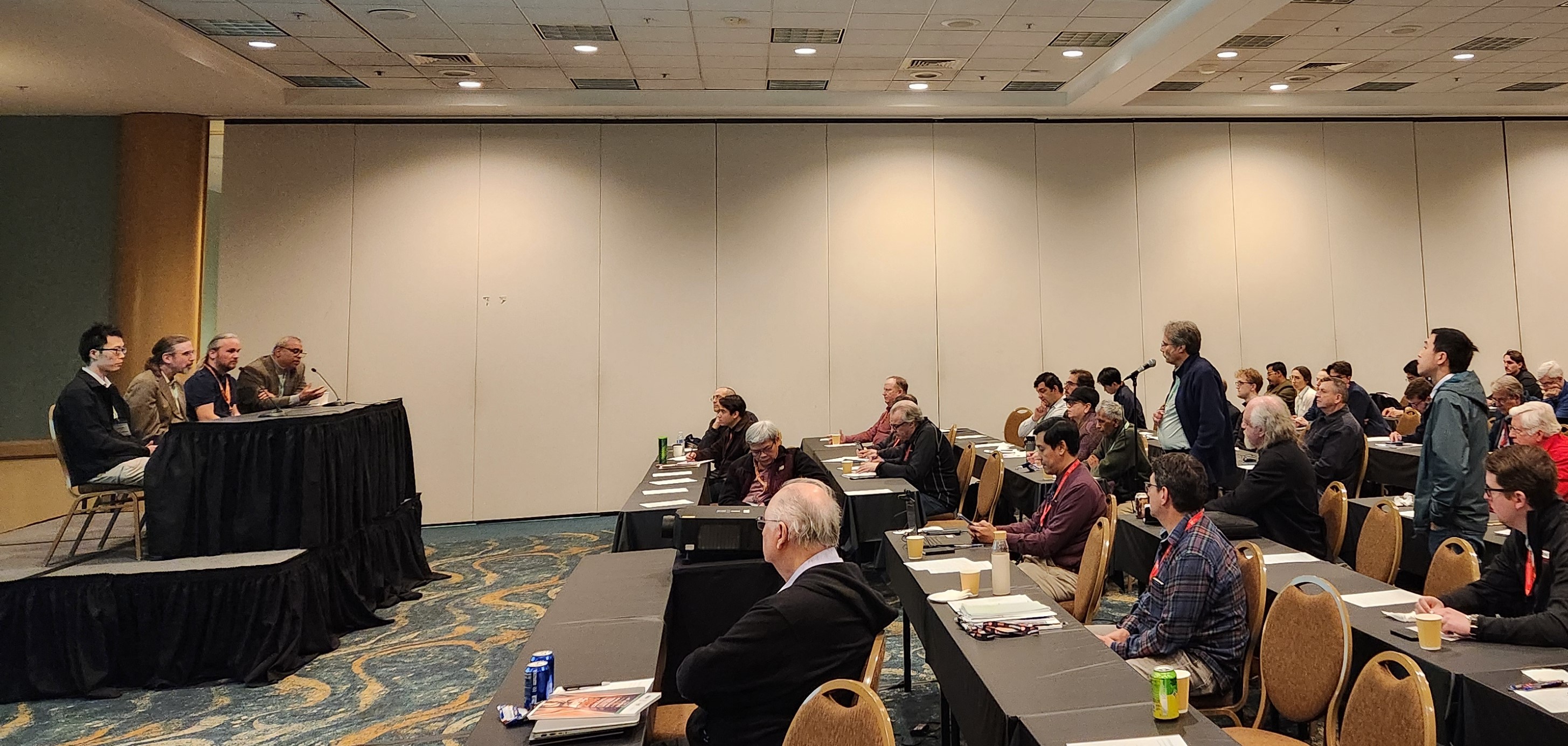
Below are some pictures from the 2025 Workshop:


.png)